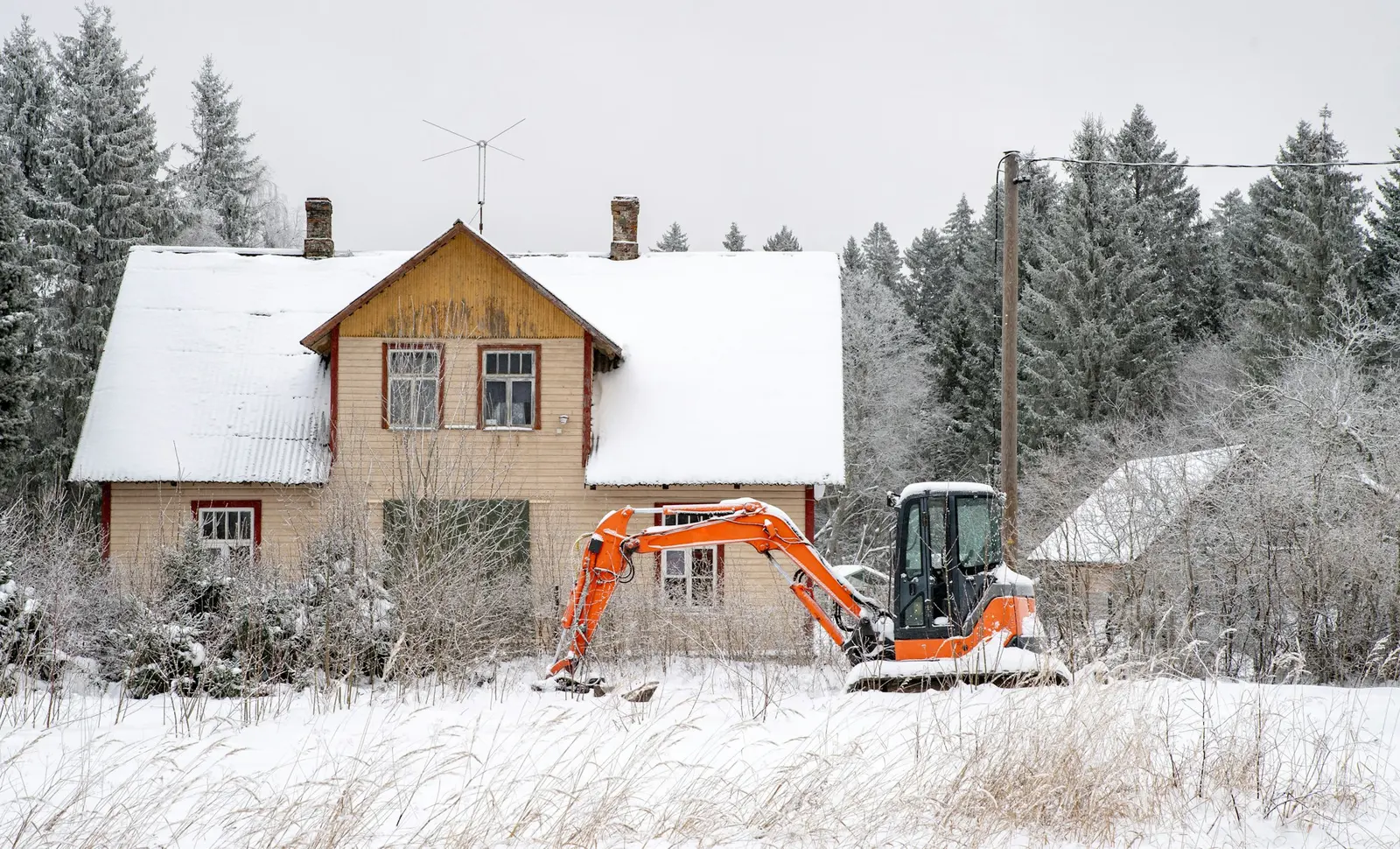
Exterior basement waterproofing
Dig to the footing, clean and seal the wall from the outside, cover it with drainage board, lay a new tile in clear stone, and backfill. The wall never gets wet again, which is why this is the repair for a basement you intend to finish.
- Whereoutside, along the wall
- SeasonApril to November
- Time3–5 days per wall
- Disturbsthe yard along that wall
Step by step
What happens on each of the five days
- Locate and protect
Utilities located, well line and septic marked, the deck or walkway lifted and set aside. Plantings that can be saved are dug and heeled in.
- Excavate to the footing
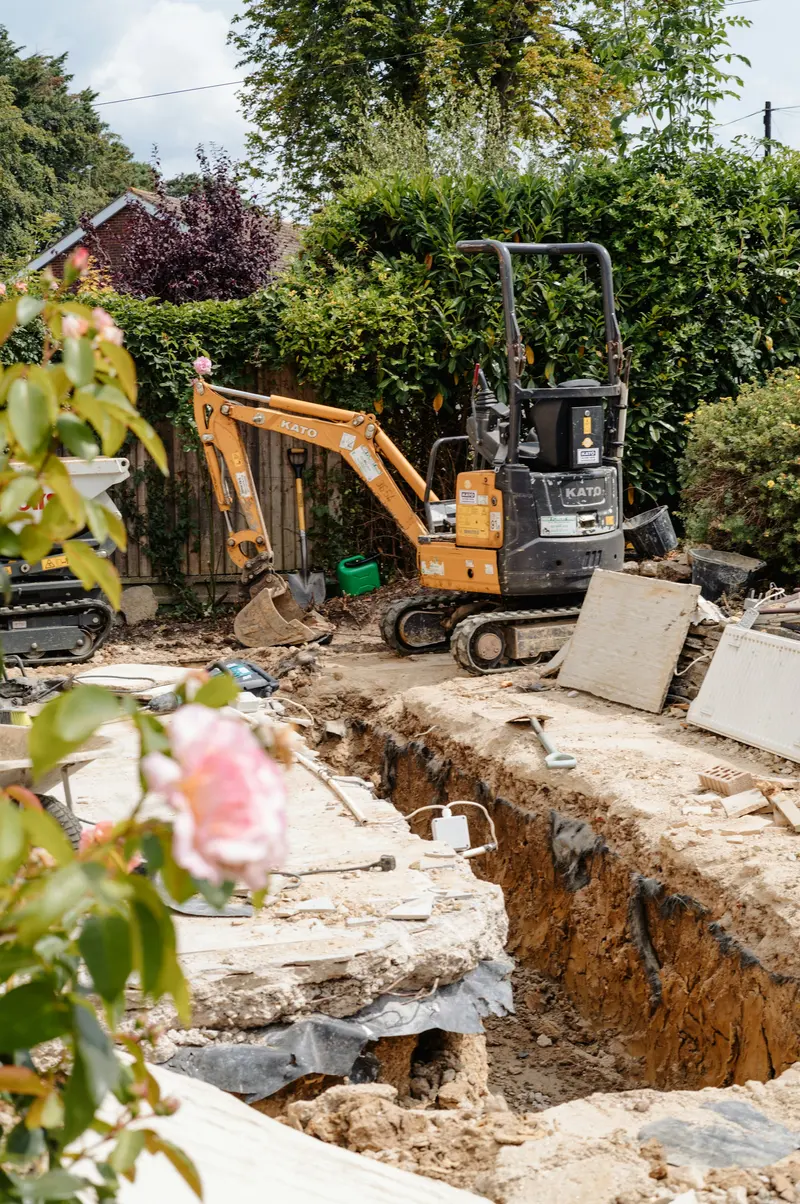
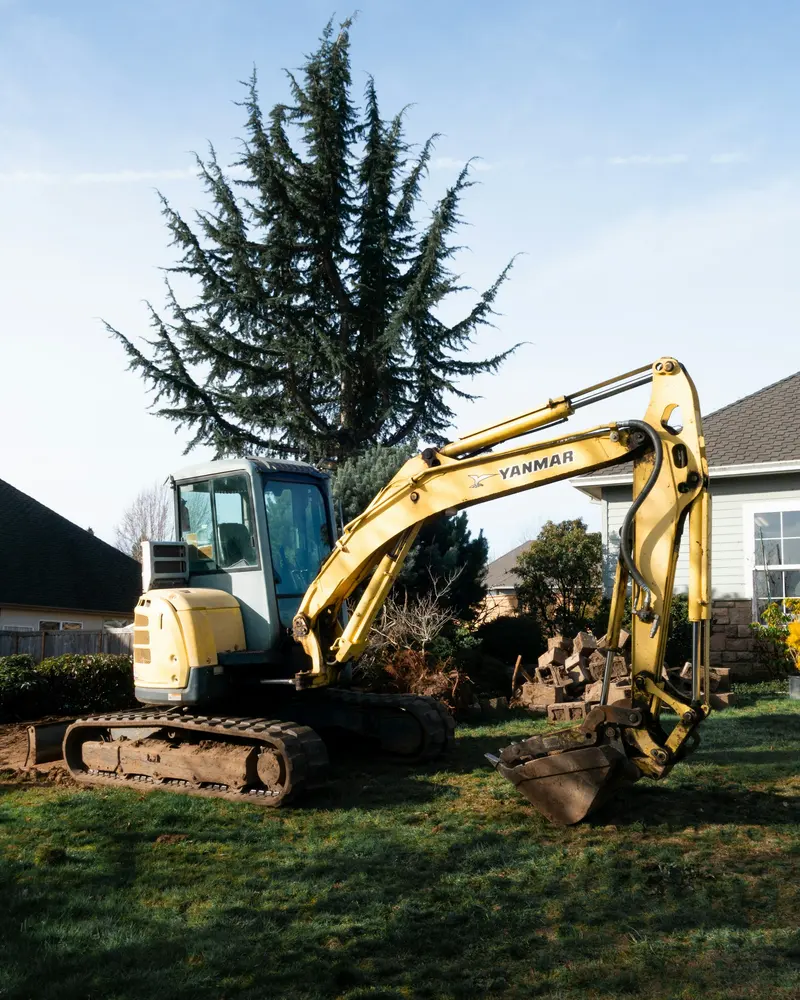
A mini excavator opens a trench along the wall down to the top of the footing, usually 1.8 to 2.4 m. Spoil is stockpiled on tarps for the backfill.
- Clean, repair, seal
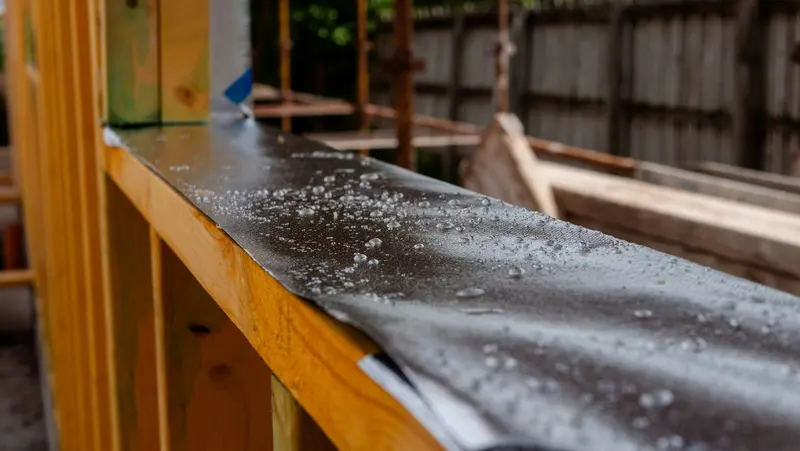
The wall is pressure-washed, cracks and tie holes patched, the cove joint at the footing filled, then a rubberised membrane is applied from footing to grade.
- Board and tile
Dimpled drainage board goes over the membrane. New perforated pipe is bedded in clear stone at the footing, wrapped in filter fabric, and connected to the sump or run to daylight.
- Backfill and grade
The trench is backfilled in lifts and compacted, the surface graded to fall away from the house, and the deck or walkway reinstated. Topsoil and seed on the disturbed strip.
Why it works
The wall becomes the dry side
Everything else we do manages water once it has reached the foundation. This is the only repair that stops it getting there. For a block wall that is losing face, for a finished basement, or for a wall that is wet along its whole length rather than at one crack, that difference is the whole point.
The cost is access: a machine has to reach the wall, and whatever is in the way comes out first. On moraine lots the digging itself is fast; in the clay of the older farm lots it is slower and the trench must be shored. We say which you have at the assessment.
The tile is replaced in the same digOn site
What the work looks like
Finishing the basement this year? Have the outside done first, while the ground is open.
Book a free assessmentQuestions
About exterior work
How long does the work take?
Crack injection: a few hours. An interior drainage system on one or two walls: two to four days, including the new concrete. An exterior excavation of one wall: three to five working days depending on depth, access and weather. We tell you the schedule in the written scope and we do not open a wall we cannot close before the next rain.
We are on a well and septic. Does that change anything?
Yes, two things. Before any excavation we locate the septic bed and lines, the well casing and its water line, so the machine never goes near them. And the discharge from a sump has to go somewhere that is not the septic bed and not back at the well head, which on a small lot takes some thought. Many houses in the township are on private services, so this is routine for us, but it has to be planned, not discovered.
Our house has a concrete block foundation. Is that a problem?
Block walls are hollow, so water that gets past the outer face fills the cores and comes out at the bottom course, often along a whole wall rather than at one spot. Injection does not work on block. The repair is either exterior waterproofing of the wall face or an interior system with a membrane that drains the cores at the base. Older houses in the village cores of the township are mostly block; newer subdivisions are poured.