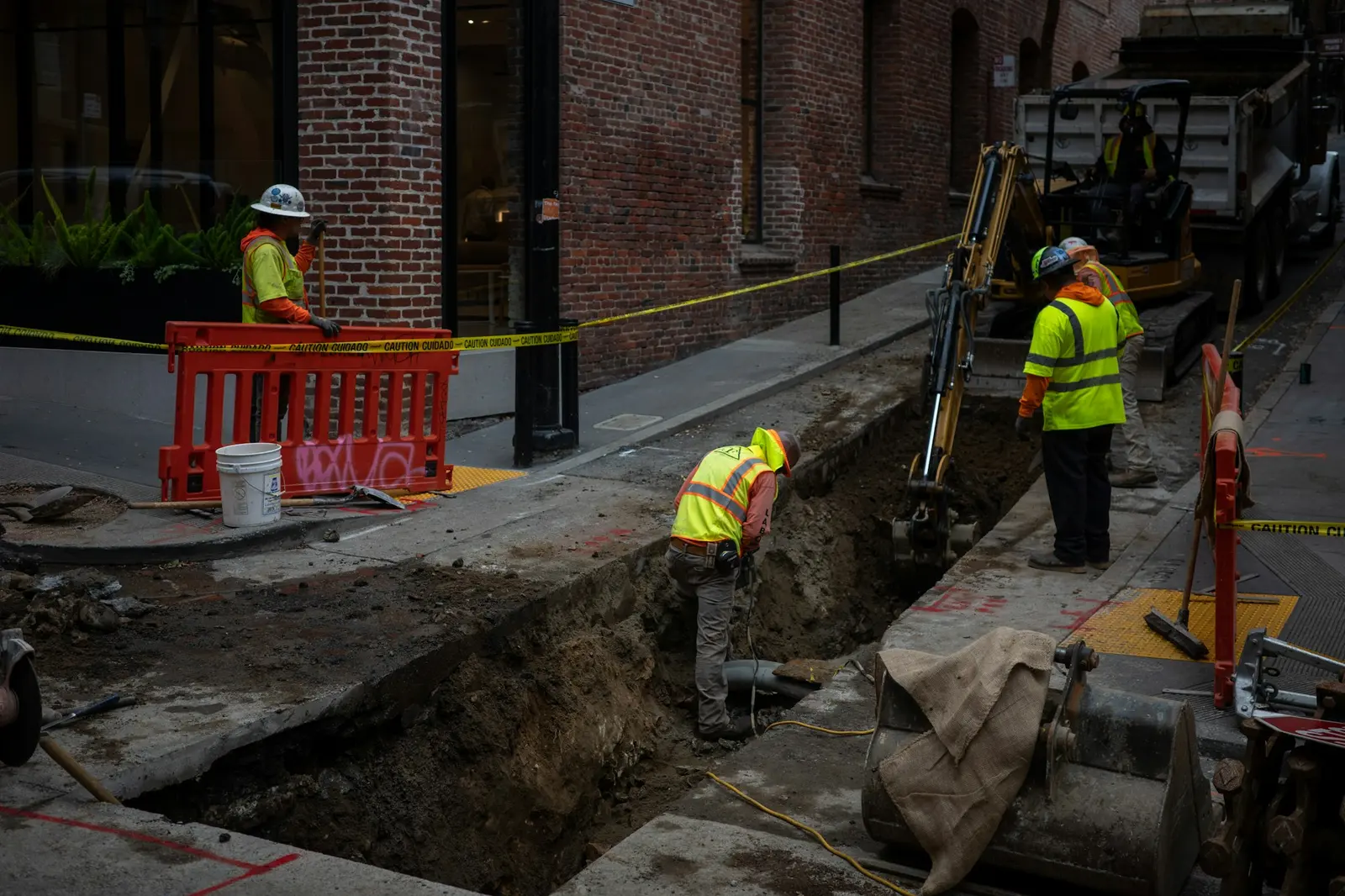
Weeping tile replacement
The drain at the footing is what keeps water from standing against the wall. In older houses in the township it is clay tile that has silted or collapsed, or it was never installed. Replacing it is part of every exterior job and sometimes the whole job.
- Whereat the footing, outside
- SeasonApril to November
- Timewith exterior work
- MaterialPVC pipe, clear stone, fabric
How tile fails
Three ways the old drain stops working
- Silt
Clay tile was laid with open joints and no fabric. Fifty years of fines washing through the joints fills the pipe, first at the low points, then all of it.
- Collapse
Clay sections crack under backfill and root pressure. A broken run holds water instead of carrying it, so the wall behind that section is permanently wet.
- Never there
Cottages that became year-round houses along the lake often have a footing and nothing else. The wall has been standing in wet ground since it was poured.
The replacement
What goes in and why each part is there
Perforated PVC pipe
Rigid, with slots on the lower half, laid with a slight fall to the sump or to daylight. Rigid pipe holds its grade; corrugated pipe sags and traps water.
Clear stone bed and cover
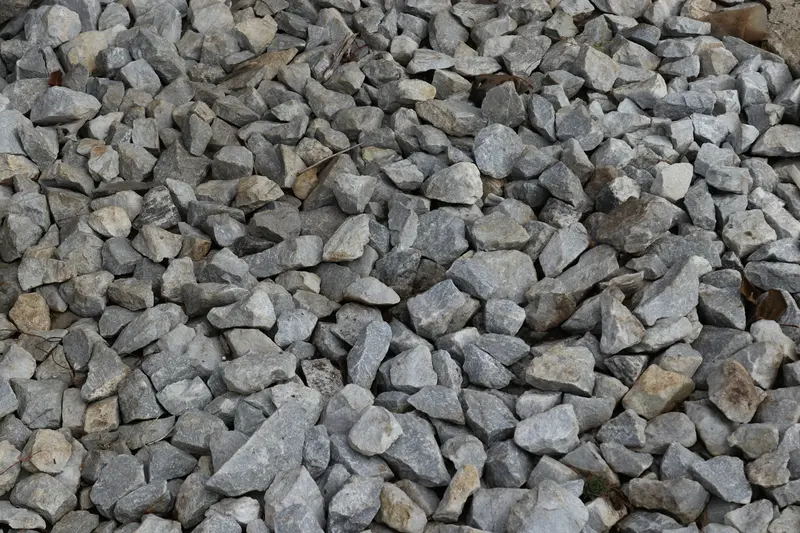
The pipe sits on stone and is covered by it, so water drops through freely and the pipe never sits in soil.
Filter fabric
Wrapped around the stone, not the pipe. Keeps silt out of the system for the life of the house, which is what the original tile lacked.
The wall sealed at the same time
With the footing exposed, sealing the wall costs a fraction of a separate job. We do not backfill against a bare wall.
House older than 1980 and damp along a whole wall? The tile is the first suspect.
Book a free assessmentQuestions
About drainage
Why does my basement only leak in spring?
Because that is when the ground around your house holds the most water: the snowpack melts over a few weeks, the frost is still in the top layer so the water cannot soak away, and spring rain lands on top of it. On the moraine that water usually drains once the frost is out; on the lakeshore flats and in clay pockets it sits against the wall for weeks. A basement that leaks only in April has a drainage problem, not a rain problem.
How long does the work take?
Crack injection: a few hours. An interior drainage system on one or two walls: two to four days, including the new concrete. An exterior excavation of one wall: three to five working days depending on depth, access and weather. We tell you the schedule in the written scope and we do not open a wall we cannot close before the next rain.
What decides the price of basement waterproofing?
Four things, in this order: how much of the wall is wet (a single crack is a small job; a whole wall is a drainage job), whether the fix is inside or outside (outside means excavation, so access for a machine matters), what is in the way (decks, walkways, a finished basement, utilities close to the wall) and what the ground is (moraine sand digs fast, clay does not). We measure all four at the assessment and give you a written price before anything is booked.